Entre Líneas: Poetry Analysis Reimagined
What if analyzing poetry could be as intuitive as reading your favorite lyrics on Genius?
Entre Líneas is a modern web application that transforms Spanish poetry analysis into an interactive, engaging experience. Built for students, teachers, and literature enthusiasts, it combines deep literary analysis with contemporary UX patterns.
- React 19Modern stack
- TanStack StartSSR framework
- TypeScriptEnd-to-end typesafety
The Challenge
Traditional poetry analysis tools are either outdated PDF documents, static websites with no interactivity, or academic platforms that feel like they’re from the early 2000s. Students and teachers deserve better, they need modern, intuitive tools that make literary analysis accessible and engaging.
The Solution
Entre Líneas brings poetry analysis into the modern web era with a fully interactive, server-rendered application built with a modern stack, designed as a personal project that merges 2 of my hobbies and solves a common problem I found when studying literature.
Core Features
- Verse-by-verse analysis with identified rhetorical figures
- Historical context and author biographies
- Interactive highlights - click any figure to see related verses
- Fully responsive - from mobile to desktop
- Instant search with real-time filtering
- Dark mode support throughout
Design & User Experience
Home: Your Poetry Library
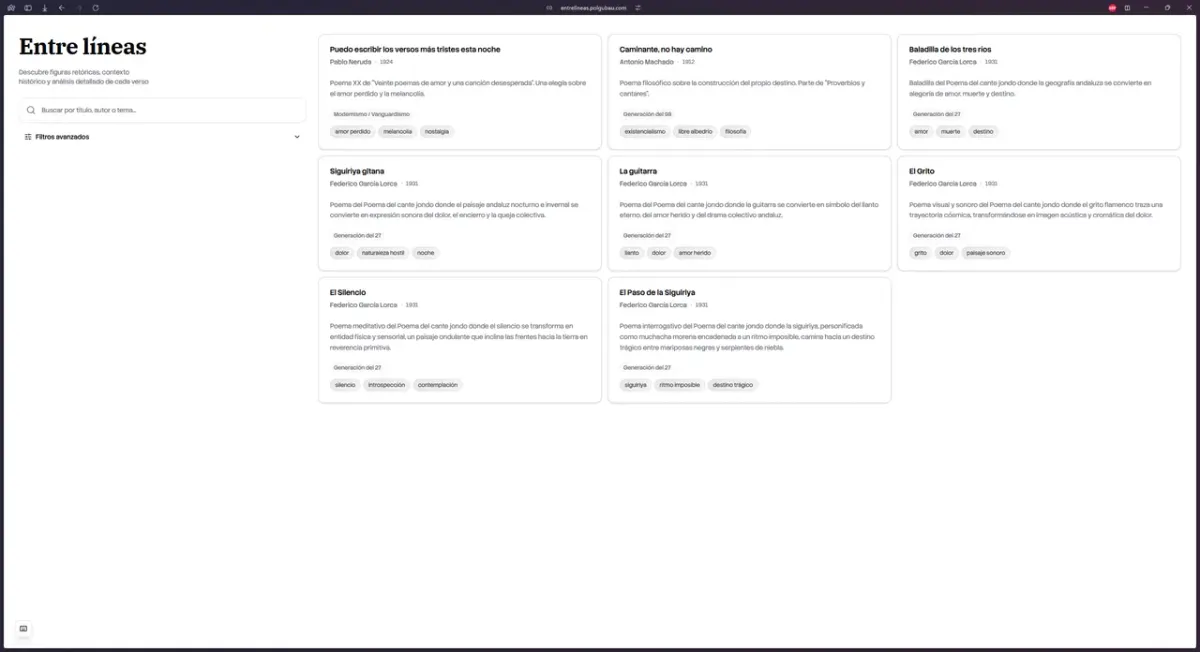
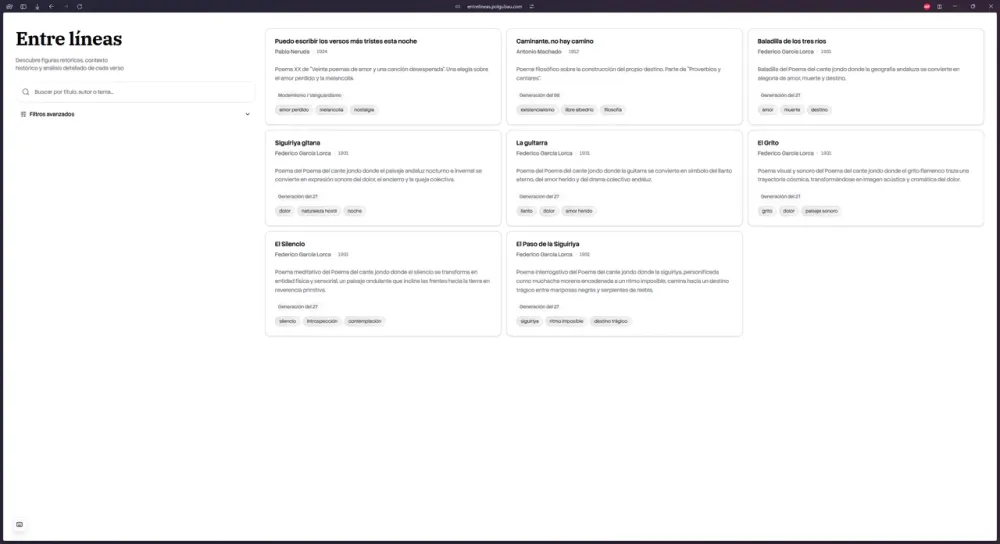
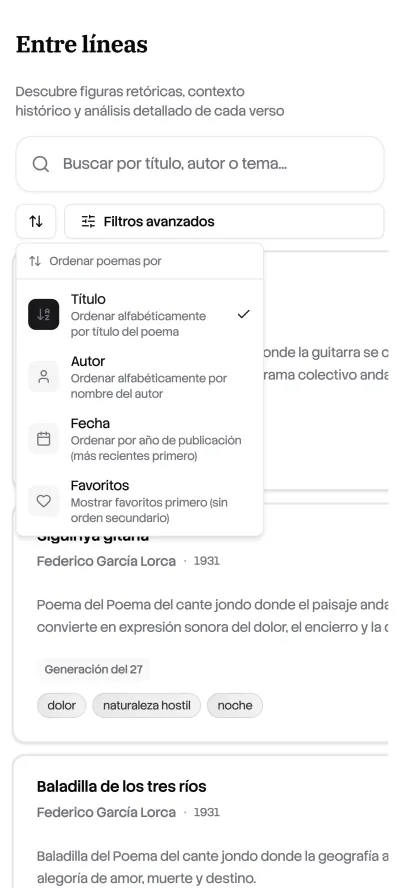
The landing page presents poems as beautiful, scannable cards. Each card displays the poem’s title, author, era, and a preview of metrics like number of verses and rhetorical figures.
Smart Filtering & Sorting
Filter poems by author, era, or literary movement. Sort by title, date, or number of verses. Everything updates in real-time.
Seamless Navigation
Navigate between poems with intuitive next/previous buttons. No page reloads, everything is instant thanks to SSR and smart prefetching.
Reading Experience
The Three-Column Layout
Desktop users get a powerful three-column interface optimized for deep analysis:
- Left sidebar: Poem navigation and quick actions
- Center: The poem itself with interactive verse annotations
- Right sidebar: Analysis panel with context, figures, and metrics
Interactive Annotations
Hover over any verse to see contextual tooltips with instant information about rhetorical figures, historical notes, or vocabulary definitions.
Rhetorical Figure Highlighting
Click on any rhetorical figure in the analysis panel, and watch as all related verses light up in the poem. This creates visual connections that make understanding complex literary devices intuitive.
Mobile-First Design
Responsive Layouts
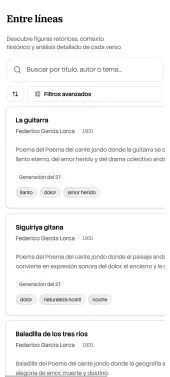
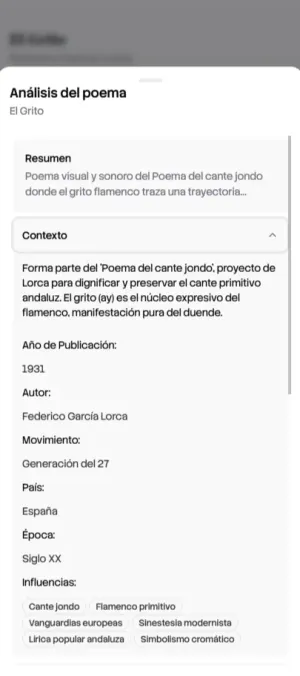
On mobile, the three-column layout transforms into a streamlined single-column view with collapsible panels. The analysis panel becomes a drawer that slides up from the bottom.
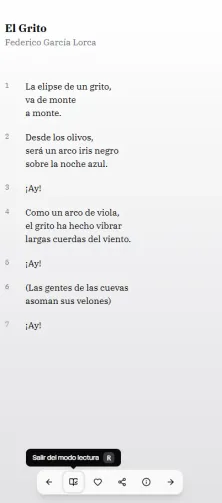
Read Mode
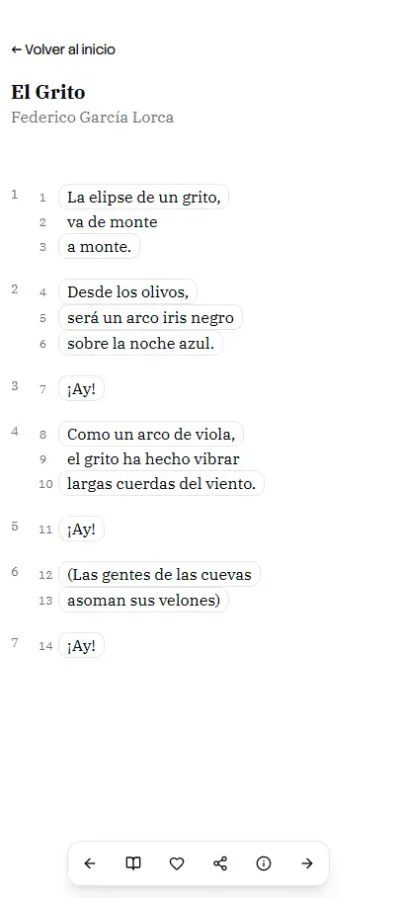
Toggle Read Mode to remove all UI distractions and focus purely on the poetry. Perfect for deep reading sessions or classroom presentations.
Advanced Features
Context Accordions
Each poem includes expandable sections with rich context: historical background, author biography, literary movement, and thematic analysis.
Action Bar & Interactions
The action bar provides quick access to essential functions:
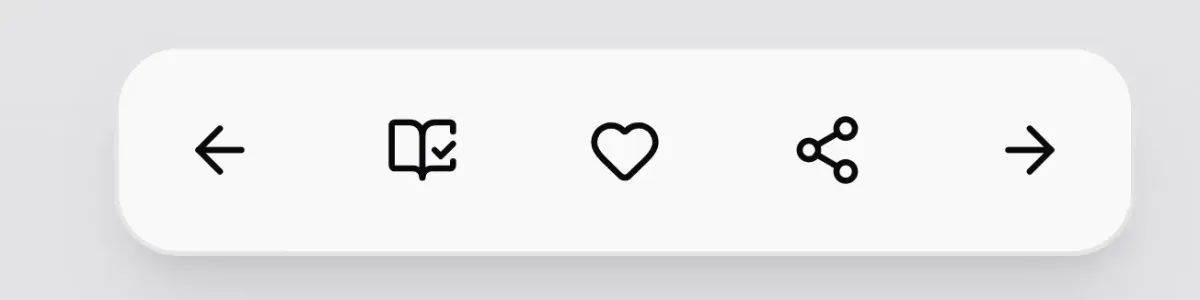
- Favorite poems with a delightful like animation
- Share directly using the native Web Share API
- Keyboard shortcuts for power users
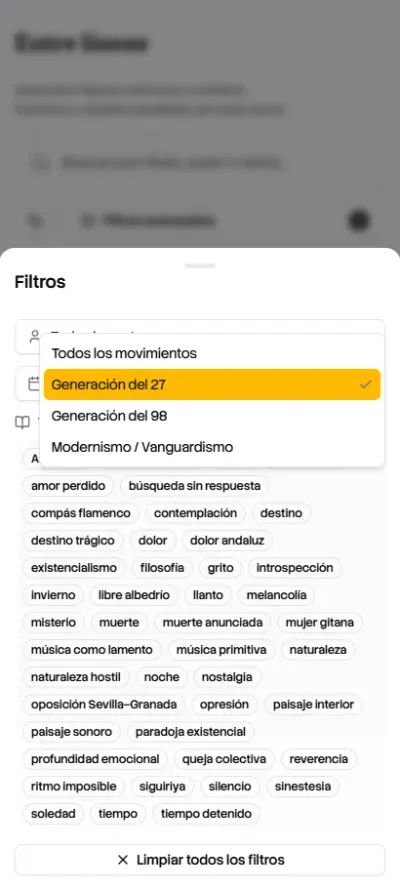
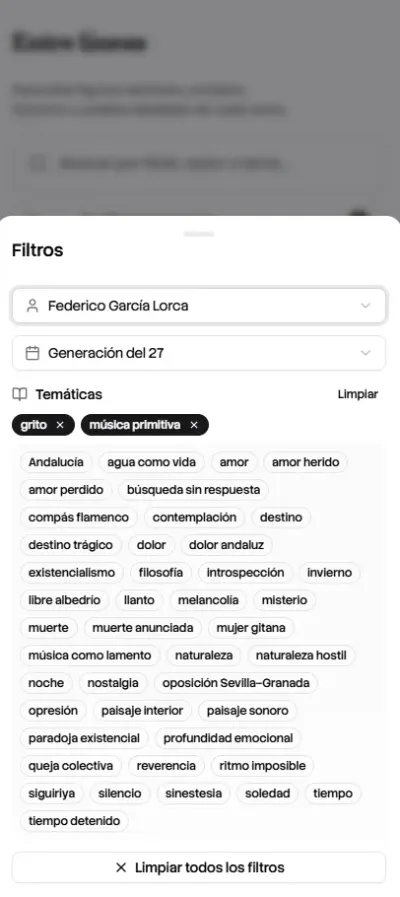
Smart Filtering
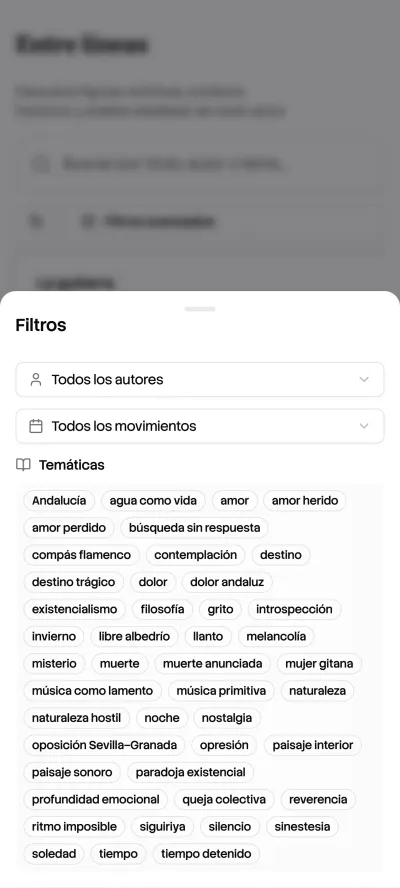
Apply multiple filters simultaneously: combine authors, eras, and literary movements to find exactly what you need.
Technical Details
For developers & curious minds
Technical Architecture
Why TanStack Start?
I chose TanStack Start over Next.js for several technical reasons:
- End-to-end type safety: Fully typed router with automatic parameter inference
- Zero API overhead: Direct data access without unnecessary HTTP layers
- Lower abstraction: More control over SSR and rendering strategies
- Modern patterns: Built-in suspense, streaming, and progressive enhancement
- Developer experience: Outstanding DevTools for debugging and optimization
Performance Optimization
// Map-based indexes for O(1) lookups instead of O(n) filters
const poemsByAuthor = new Map<string, Poem[]>();
const figuresByType = new Map<string, Figure[]>();
All data is statically embedded at build time, eliminating network requests and ensuring instant responses. This approach provides:
- Zero latency for data access
- Free hosting on any CDN (Vercel, Netlify, Cloudflare)
- Perfect caching - immutable content gets cached forever
- Offline capability - works without network once loaded
Lighthouse Scores
Data Architecture
Poem Structure
interface Poem {
  id: string;
  title: string;
  author: Author;
  era: Era;
  verses: Verse[];
  figures: Figure[];
  context: Context;
  metrics: {
    verseCount: number;
    figureCount: number;
    readingTime: number;
  };
}
Figure Highlighting System
const highlightFigure = (figureId: string) => {
  const relatedVerses = figureToVerseMap.get(figureId) ?? [];

  // Batch DOM updates for performance
  requestAnimationFrame(() => {
    relatedVerses.forEach(verseId => {
      document
        .querySelector(`[data-verse-id="${verseId}"]`)
        ?.classList.add('highlighted');
    });
  });
};
Responsive Design Breakpoints
/* Mobile-first approach */
.layout {
  grid-template-columns: 1fr; /* Mobile */
}

@media (min-width: 768px) {
  .layout {
    grid-template-columns: 240px 1fr; /* Tablet */
  }
}

@media (min-width: 1024px) {
  .layout {
    grid-template-columns: 280px 1fr 320px; /* Desktop */
  }
}
Deployment
Vercel Configuration
{
  "buildCommand": "pnpm build",
  "outputDirectory": "dist",
  "framework": "vite",
  "installCommand": "pnpm install"
}
Environment Setup
No environment variables required-all data is statically embedded. This makes deployment trivial and eliminates configuration errors.
Future Enhancements
- 📝 User annotations and notes
- 👥 Community contributions for new poems
- 🎓 Study guides and lesson plans for teachers
- 🔊 Audio recordings of poem recitations
- 🌍 Multi-language support (Catalan, English)
- 📊 Learning analytics for students
Key Takeaways
For Recruiters
- Modern stack: React 19, TypeScript, TanStack Start (SSR)
- Performance-first: Optimized data structures, static generation, perfect Lighthouse scores
- Design systems: shadcn/ui inspired, fully responsive, dark mode
- Accessibility: WCAG compliant, keyboard navigation, semantic HTML
- Production-ready: Deployed on Vercel with CI/CD pipeline
For Developers
- Architecture: Server-rendered React with client-side hydration
- Data strategy: Static data with Map-based indexes for O(1) lookups
- Type safety: Full end-to-end TypeScript with strict mode
- Styling: Tailwind CSS with custom design tokens
- State management: TanStack Router for URL-driven state
- Deployment: Vercel with automatic preview environments
For Literature Enthusiasts
- Intuitive: No learning curve-hover, click, explore
- Fast: Instant navigation, no loading spinners
- Beautiful: Clean, modern interface that respects your preferences
- Accessible: Works on any device, any screen size, any input method
- Educational: Makes poetry analysis engaging and approachable
Conclusion
Entre Líneas represents the intersection of literature and modern web technology. By applying contemporary UX patterns to classical poetry analysis, it demonstrates how digital tools can enhance rather than replace traditional learning.
The project showcases technical excellence through performance optimization, type safety, and accessibility, while maintaining a focus on user experience and educational value. It’s a testament to how thoughtful engineering can make complex subjects more accessible and engaging for everyone.
Links